


 English
 русский
+86-0559-5290604
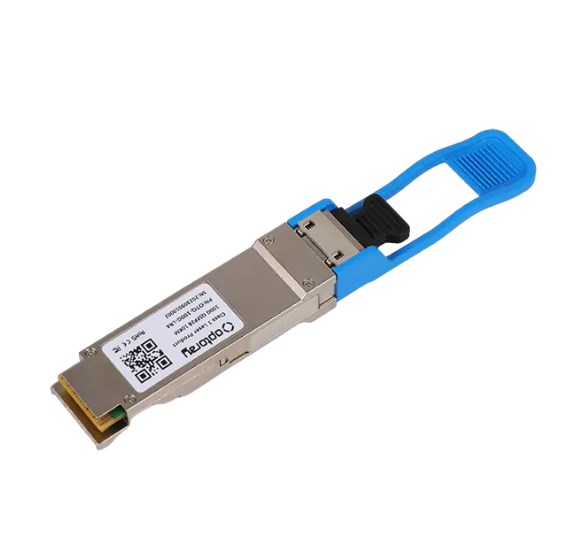
QSFP28-100G-ER4: Core Applications of High-Performance Optical Modules in Data Centers
With the rapid development of cloud computing, big data, and artificial intelligence, data centers are increasingly demanding high-speed, high-bandwidth optical communication. Against this backdrop, the QSFP28-100G-ER4 optical module, as a core component of 100G Ethernet and high-speed optical interconnects, has become an indispensable key component in modern data centers and telecommunications networks. The QSFP28-100G-ER4 not only meets the requirements for long-distance transmission but also demonstrates significant advantages in energy efficiency, stability, and compatibility, making it a focus of industry attention.
Technical Characteristics and Advantages of QSFP28-100G-ER4
The QSFP28-100G-ER4 is a high-performance optical transceiver module. Its core characteristics include high bandwidth, low power consumption, and excellent signal integrity. Compared with traditional optical modules, the QSFP28-100G-ER4 achieves significant improvements in transmission distance and reliability, maintaining stable signal transmission in fiber optic links spanning tens of kilometers. These modules typically employ a four-channel design, with each channel offering a transmission rate of up to 25Gbps. Through efficient wavelength division multiplexing (WDM) technology, they achieve a total bandwidth of 100G, meeting the high-speed transmission requirements of data center backbone networks and metropolitan area networks.
In terms of energy efficiency, the QSFP28-100G-ER4 module achieves low-power operation through optimized circuit design and optics. Low power consumption not only reduces the overall energy consumption of the data center but also lessens the burden of thermal management, providing reliable assurance for large-scale deployment. Furthermore, the module boasts strong compatibility, seamlessly adapting to various network devices and transmission protocols, reducing upgrade and maintenance costs, and improving network ROI.
Long-Distance Transmission and Network Optimization
Another major advantage of the QSFP28-100G-ER4 lies in its superior long-distance transmission capability. For data center interconnects and intercity backbone networks, transmission distance is often a critical factor in network design. The QSFP28-100G-ER4, through advanced optical design and high-performance lasers, achieves long-distance transmission without relay equipment, thereby reducing network complexity and operational costs. Meanwhile, its high signal-to-noise ratio design ensures stability in complex fiber optic environments, making the signal virtually unaffected by attenuation and interference during transmission.
In terms of network optimization, the QSFP28-100G-ER4 module supports multiple modulation and coding technologies, reducing the bit error rate while maintaining high-speed transmission. This is particularly important for high-density server interconnects and high-speed switching networks in data centers, enabling smooth large-scale data exchange, virtualization applications, and high-performance computing. Furthermore, the module's hot-swappable design improves equipment maintenance flexibility, reduces downtime, and enhances overall network availability.
Industry Applications and Development Trends
With the rapid development of enterprise-level and hyperscale data centers, the application of QSFP28-100G-ER4 optical modules in the industry is showing a diversified trend. It is not only widely deployed in core switches and routers but is also gradually becoming a standard configuration for high-performance storage networks and cloud computing infrastructure. Especially in high-speed data transmission and cross-data center interconnect scenarios, QSFP28-100G-ER4, with its long-distance transmission capabilities and stable performance, has become a crucial support for ensuring business continuity.
From a technological development perspective, optical communication modules are evolving towards higher bandwidth, lower latency, and greater energy efficiency. The QSFP28-100G-ER4, as a representative of 100G optical modules, lays the technological foundation for the development of 400G and higher-speed optical modules. In the future, with improved optical integration and the application of new modulation technologies, optical modules will further achieve miniaturization, high density, and intelligence, providing more possibilities for data center network upgrades.
Key Considerations for Choosing QSFP28-100G-ER4
When selecting and deploying QSFP28-100G-ER4 optical modules, performance, compatibility, and reliability are crucial factors. In terms of performance, attention should be paid to the module's transmission distance, rate stability, and bit error rate to ensure stable connectivity even under high load conditions. Regarding compatibility, the module needs to seamlessly integrate with existing network equipment and management systems to avoid network bottlenecks caused by interface or protocol incompatibility. In terms of reliability, high-temperature environmental adaptability, anti-interference capabilities, and long-term stability are key indicators for ensuring continuous network operation.
Meanwhile, as data centers expand in scale, energy efficiency management of optical modules is receiving increasing attention. The QSFP28-100G-ER4, through optimized power consumption design and intelligent temperature control technology, can reduce overall energy consumption while meeting high-performance transmission requirements, achieving both economic and technological value.
Conclusion
With its high-speed transmission, long-distance coverage, and high stability, the QSFP28-100G-ER4 optical module has become an indispensable core component in modern data centers and telecommunications networks. It not only meets the stringent bandwidth and reliability requirements of high-speed networks but also demonstrates significant advantages in energy saving, compatibility, and ease of maintenance.
As data center and optical communication technologies continue to evolve, the QSFP28-100G-ER4 will continue to play a vital role in high-performance network architectures, driving the industry towards higher bandwidth, lower latency, and higher energy efficiency.



Mobile Web
Quick Links
Products
Get in Touch
-
 Phone: +86-186 5596 6697
-
 E-mail: [email protected]
-
 Add:No.4 PiYun Road, Huangshan Economic Development Zone, Huangshan City, Anhui Province, China.
Copyright © Huangshan Optoray Communication Corp., Ltd. All rights reserved.
China SFP Transceiver Module Manufacturers


