


 English
 русский
+86-0559-5290604
How to Choose a Third-Party Compatible Optical Transceiver: A Wholesale Buyer's Guide
Network engineers and procurement managers sourcing optical transceivers for data center, enterprise, or telecom deployments face a consistent decision: pay OEM prices for branded modules, or source compatible third-party transceivers at a fraction of the cost. For large-scale deployments, the cost difference is substantial — OEM transceivers typically cost 5 to 10 times more than equivalent third-party compatible modules for the same optical specifications.
But not all third-party compatible optical transceivers deliver equivalent performance and reliability. This guide covers how to evaluate a third-party transceiver manufacturer, what specifications to verify before ordering, how to confirm platform compatibility, and what to test before deploying in production.
Why Use Third-Party Compatible Optical Transceivers?
The cost case for third-party compatible transceivers is well established in the industry. A single OEM 10G SFP+ LR module from a major switch vendor typically costs USD 200 to USD 600. An equivalent third-party compatible module with identical optical specifications and platform-compatible EEPROM coding costs USD 15 to USD 50. Across a 1,000-port deployment, this difference represents hundreds of thousands of dollars in capital savings.
Beyond cost, third-party manufacturers often offer faster availability on specific variants, more flexible minimum order quantities, and OEM/ODM customization services that are not available from major branded vendors.
The risk concerns historically associated with third-party transceivers — compatibility warnings, performance degradation, or warranty impact — have been substantially addressed by reputable manufacturers through rigorous EEPROM coding development and comprehensive production testing. For most mainstream network applications, a well-sourced third-party transceiver performs identically to the OEM equivalent.
Key Criteria for Evaluating a Third-Party Transceiver Manufacturer
The quality gap between the best and worst third-party optical transceiver manufacturers is significant. The following criteria distinguish manufacturers capable of supplying production-quality modules from those producing commodity products with inadequate quality control.
1. In-House Production vs Trading
Verify whether the supplier manufactures transceivers in-house or resells products from third-party factories. In-house manufacturers control production quality at every stage — component sourcing, assembly, testing, and EEPROM coding. Traders have limited visibility into the production quality of the modules they supply. Ask directly whether the supplier owns the production facility, and request factory photos or a factory audit if the order volume justifies it.
2. Optical Component Quality
The optical subassembly — the laser transmitter (VCSEL or DFB laser) and photodiode receiver — is the most critical component in an optical transceiver and the primary determinant of optical performance and reliability. High-quality manufacturers source optical components from established suppliers and can identify the component brand and specification used in their modules. Be cautious of suppliers who cannot identify the optical components used in their products.
3. EEPROM Coding Library and Update Process
Platform compatibility depends entirely on the EEPROM coding written into the transceiver's memory at the time of manufacture. A manufacturer with a comprehensive EEPROM coding library covering current firmware versions for Cisco, Arista, Juniper, Huawei, H3C, Nokia, and other major platforms can supply plug-and-play compatible modules without CLI workarounds. Ask the supplier to confirm their coding coverage for your specific switch model and software version before ordering.
4. Production Testing Capability
Every optical transceiver must be individually tested before shipment to verify that optical power output, receiver sensitivity, wavelength, extinction ratio, and eye diagram meet the specifications. Manufacturers with automated test equipment (ATE) platforms can perform 100% production testing and provide per-unit or per-lot test data. Manufacturers without adequate test equipment cannot guarantee that every unit shipped meets specifications.
5. DOM Support
Digital Optical Monitoring (DOM) allows network management systems to read real-time temperature, supply voltage, bias current, transmit power, and receive power from each transceiver. DOM data is essential for network health monitoring and proactive maintenance in managed environments. Confirm that the transceivers support full DOM functionality compatible with the target platform's monitoring tools.
6. Warranty and After-Sales Support
A credible third-party transceiver manufacturer should offer a minimum 1-year warranty covering defects in materials and workmanship, with a clear RMA process for defective units. Manufacturers confident in their product quality typically offer 3-year or lifetime warranties. Evaluate the supplier's response time and willingness to replace defective units without excessive documentation requirements.
Platform Compatibility: What to Check Before Ordering
Platform compatibility is the most common concern for buyers sourcing third-party optical transceivers. The following steps ensure that compatibility is verified before bulk orders are placed.
Identify Your Switch Platform and Software Version
Collect the exact model number and software/firmware version for every switch model where the transceivers will be deployed. Compatibility can vary between software versions on the same hardware platform — a code that works on one IOS version may not work on a newer release if the vendor updated their compatibility check logic.
Request Compatibility Confirmation from the Manufacturer
Provide your switch model and software version to the transceiver manufacturer and request written confirmation that their product is compatible. Reputable manufacturers maintain current compatibility records and can confirm whether their EEPROM coding has been tested on specific platform/software combinations.
Order a Sample Before Bulk Commitment
Always test a sample of 2 to 5 units in your actual network environment before committing to a bulk order. Insert the module, verify that it is recognized without error messages, confirm that DOM data is readable, and run a traffic test at line rate to verify error-free operation. A 15-minute acceptance test eliminates the risk of discovering compatibility issues after 1,000 units have been deployed.
Verify on All Relevant Platforms
If the same transceiver model will be deployed across multiple switch platforms — for example, both Cisco and Arista in the same network — verify compatibility on each platform separately. EEPROM coding requirements differ between vendors, and a module coded for Cisco may not be recognized by Arista without separate coding.
Optical Transceiver Specifications to Verify Before Ordering
Beyond platform compatibility, verify the following optical specifications against the requirements of your specific deployment before placing an order.
Reach and Fiber Type
Confirm that the transceiver's rated reach is compatible with the actual fiber plant distance and fiber type (multimode or single-mode) in your deployment. A 10G LR module rated for 10km on single-mode fiber will not operate correctly on multimode fiber, and a 10G SR module rated for 300m on OM3 fiber will not reach a 500m link. Always match the transceiver's reach specification to the actual fiber plant conditions, including the total insertion loss from connectors and splices.
Operating Temperature Range
Standard commercial-grade transceivers are rated for 0°C to 70°C operating temperature. Industrial-grade transceivers extend the range to -40°C to 85°C for outdoor, industrial, or harsh environment deployments. Verify that the transceiver's temperature rating covers the full range of conditions in the deployment environment.
Wavelength and Protocol
Confirm the operating wavelength matches the fiber plant and any WDM mux/demux equipment in the link. For CWDM applications, verify that the transceiver's wavelength matches the channel assignment in your CWDM system. For protocol-specific applications (Fibre Channel, SONET/SDH, OTN), verify that the transceiver supports the required protocol and data rate.
Connector Type
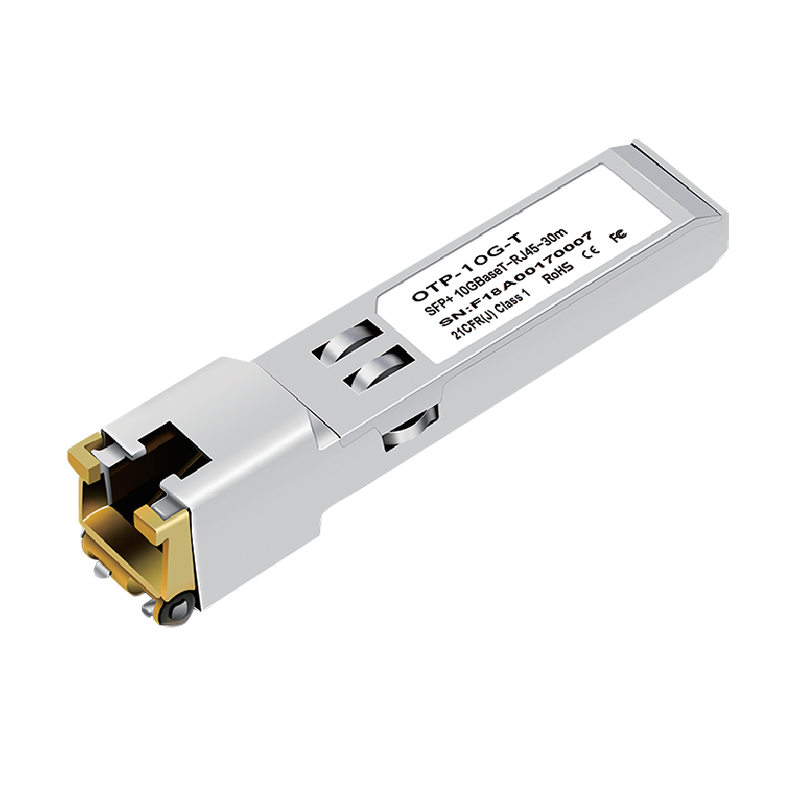
Verify that the transceiver's fiber connector type — LC duplex, LC simplex (BiDi), MPO, or RJ-45 — matches the cable plant and patch panel connectors in the deployment. An LC connector transceiver cannot connect to an SC patch cable without an adapter.
How to Test a Third-Party Transceiver Before Production Deployment
A standard acceptance test for third-party optical transceivers can be completed in 10 to 15 minutes per module and provides high confidence that the module will perform reliably in production.
- Physical insertion: Insert the module and confirm it seats correctly without force. Check that the latch mechanism engages cleanly.
- Recognition check: Verify that the switch recognizes the module without error or warning messages. Check the module inventory listing to confirm the correct part number and vendor ID.
- DOM readings: Read the DOM data and verify that temperature, voltage, bias current, transmit power, and receive power are within the normal operating range specified in the datasheet.
- Link-up test: Connect a fiber patch cable to a compatible far-end device and verify that the link comes up at the expected speed.
- Traffic test: Run a traffic generator at 100% line rate for 5 minutes and verify zero bit errors and zero interface errors in the switch counters.
- Temperature stability: If testing conditions allow, verify DOM temperature readings remain stable after 10 minutes of operation at line rate.
Frequently Asked Questions (FAQ)
Q: Will using third-party transceivers void the switch vendor's warranty?
A: Switch vendors technically reserve the right to disclaim warranty coverage for issues caused by third-party components. In practice, a switch hardware failure caused by the switch itself — not the transceiver — is seldom denied warranty service solely because a third-party transceiver was installed. The risk of warranty impact is very low for mainstream switch hardware from established vendors. For mission-critical infrastructure where warranty protection is essential, evaluate the risk on a case-by-case basis and maintain a small stock of OEM modules for warranty event support if required.
Q: What does "MSA compliant" mean for optical transceivers?
A: MSA (Multi-Source Agreement) compliance means the transceiver conforms to the industry standard specification for its form factor — SFP MSA, SFP+ MSA, SFP28 MSA, QSFP28 MSA, etc. — covering physical dimensions, electrical interface, EEPROM data structure, and mechanical specifications. An MSA-compliant transceiver from any manufacturer should be physically and electrically compatible with any MSA-compliant port. Vendor-specific EEPROM coding is a layer on top of MSA compliance that addresses vendor lock-in rather than fundamental technical compatibility.
Q: Can I mix OEM and third-party transceivers in the same switch?
A: Yes. OEM and third-party transceivers can be installed in different ports of the same switch without any interaction between them. Each port operates independently, and the presence of third-party modules in some ports does not affect the operation of OEM modules in other ports. The only consideration is that the switch's management interface may display different vendor ID information for OEM versus third-party modules in its port inventory.
Q: How do I know if a third-party transceiver supports DDM/DOM?
A: Request the transceiver's datasheet from the manufacturer and confirm that it lists DDM (Digital Diagnostic Monitoring) or DOM support. The datasheet should specify which DDM parameters are supported — typically temperature, supply voltage, TX bias current, TX power, and RX power. You can also verify DDM support after installation by checking whether these parameters are readable through the switch's management interface using the platform's transceiver monitoring commands.
Q: What is the typical lead time for bulk transceiver orders from a Chinese manufacturer?
A: Lead times for standard specification transceivers from established Chinese manufacturers are typically 7 to 20 working days for modules available in stock, and 15 to 30 working days for production orders. Custom EEPROM coding for new platform compatibility typically adds 3 to 7 working days for initial coding development. Expedited air freight shipping from China to most destinations takes 3 to 7 business days once the order is ready.
Source Compatible Optical Transceivers from Optoray
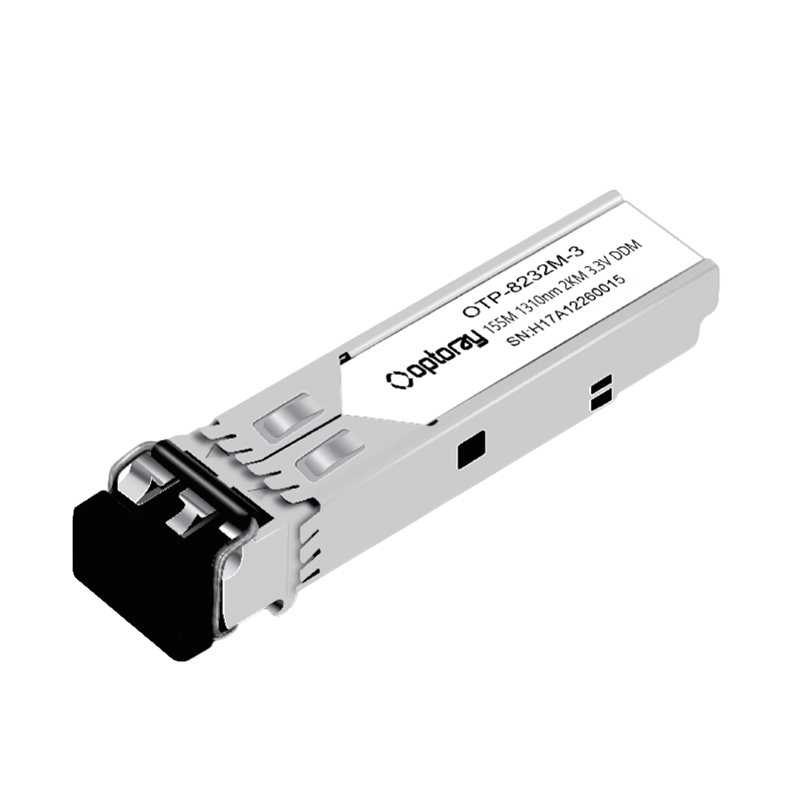
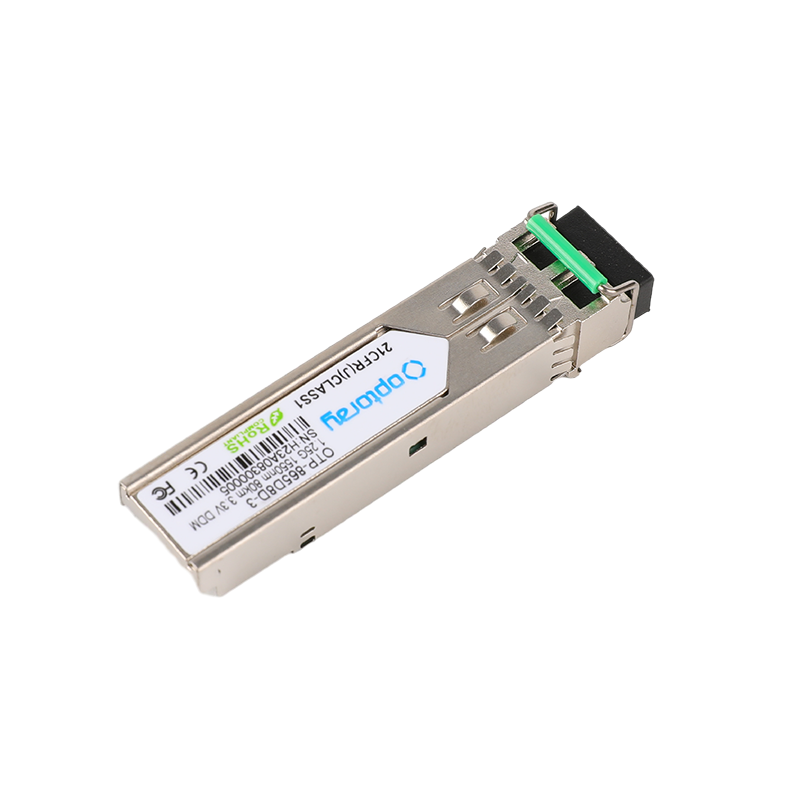
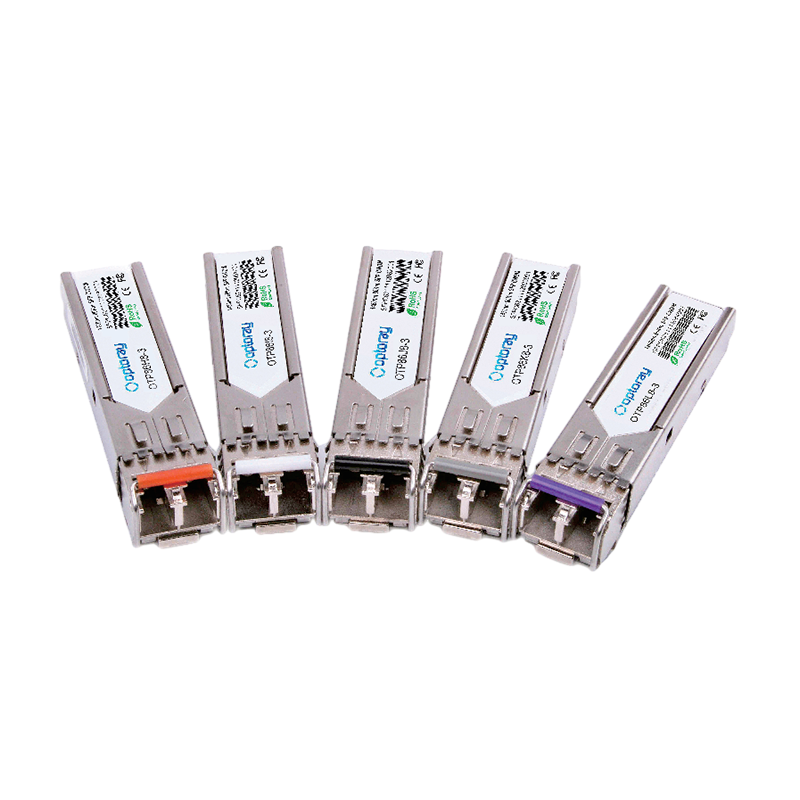
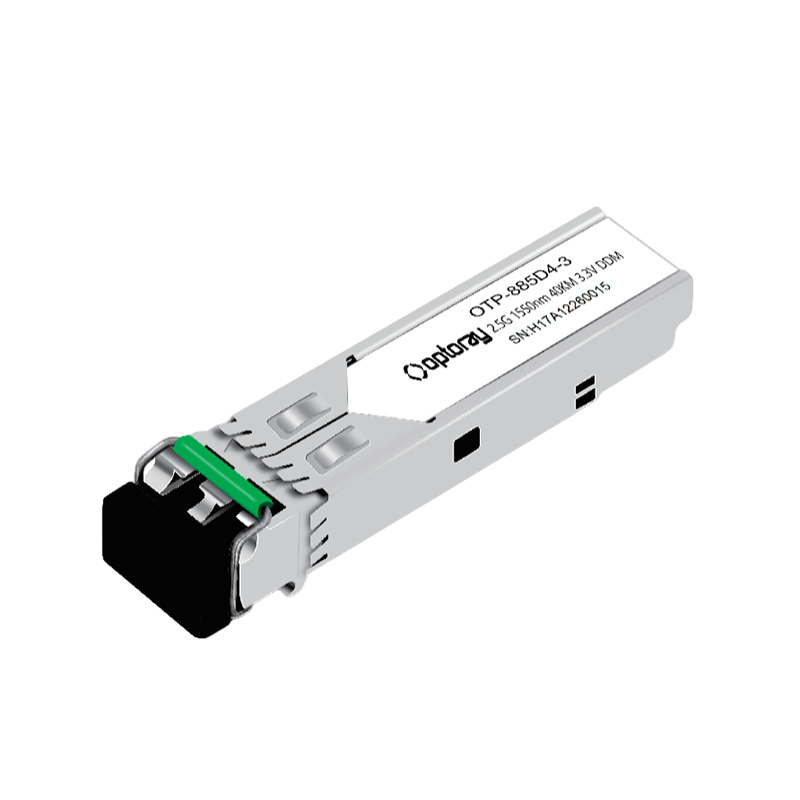
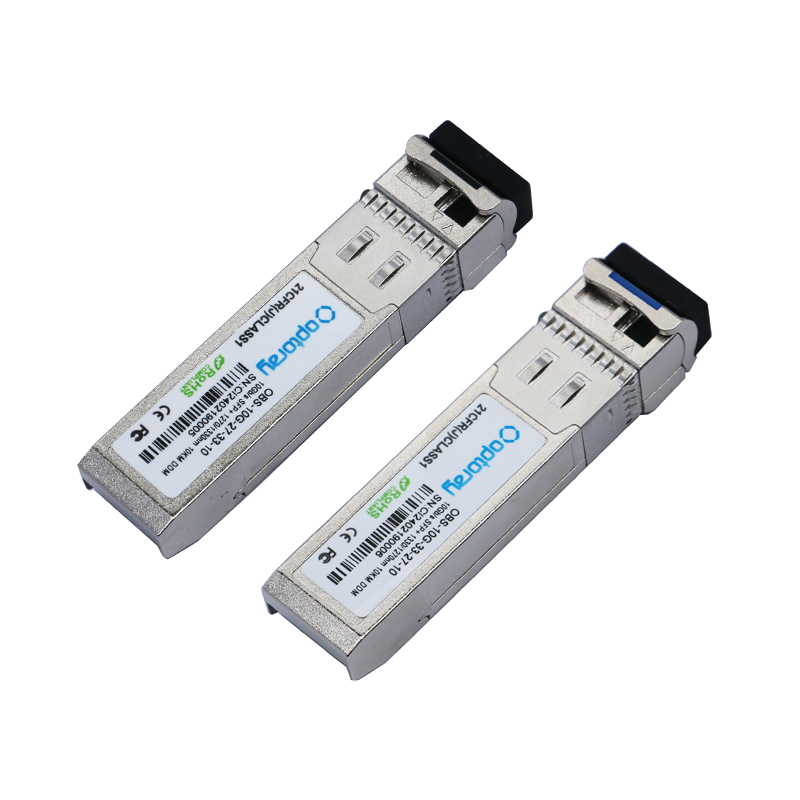
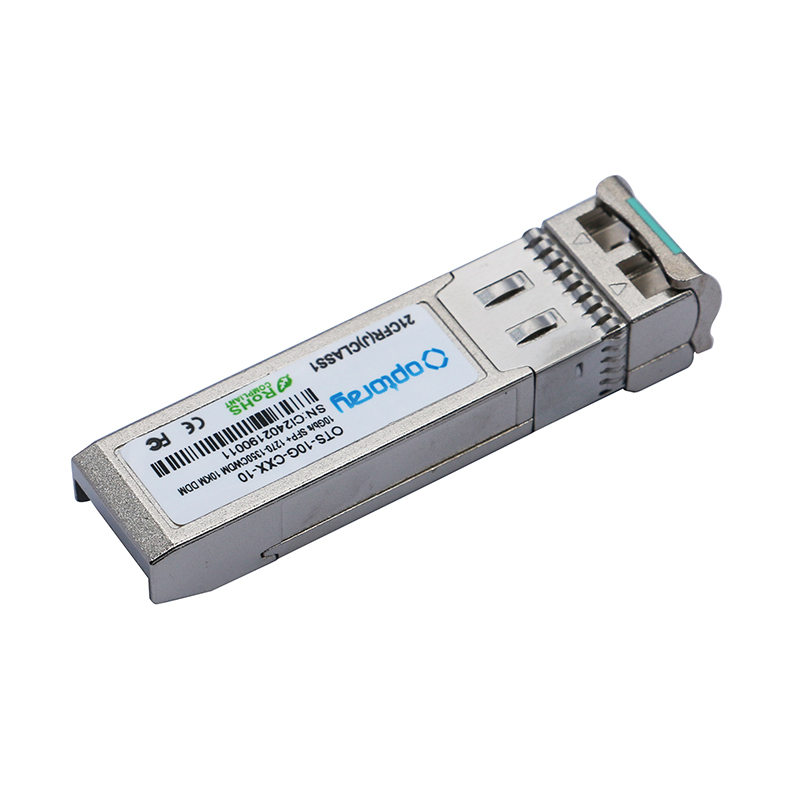
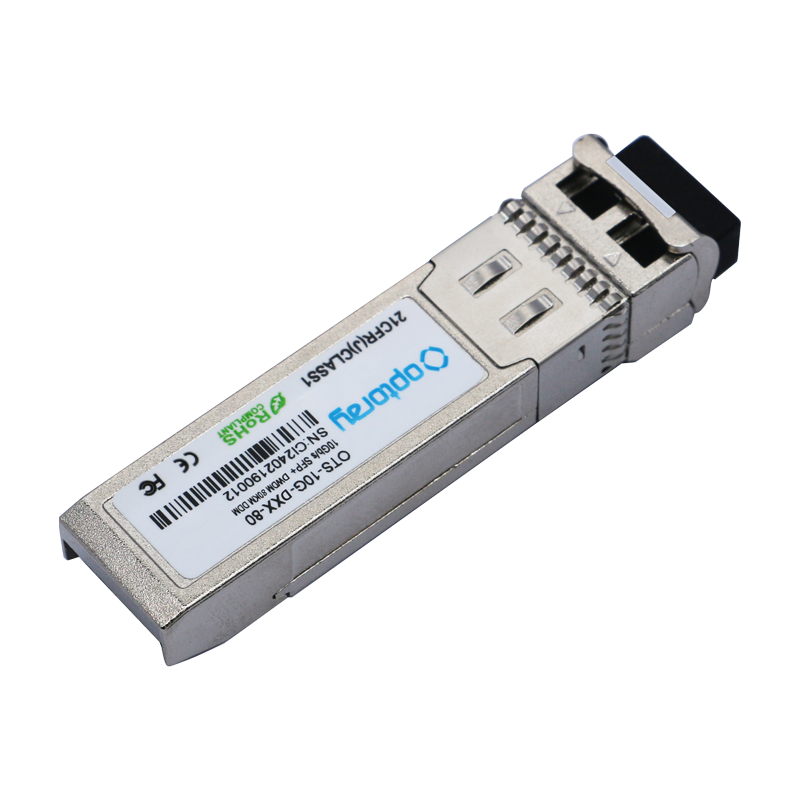
Huangshan Optoray Communication Corp., Ltd. is an in-house manufacturer of compatible optical transceivers covering the full range from 1G SFP to 800G, including SFP, SFP+, SFP28, QSFP+, QSFP28, 200G, 400G, 800G, AOC, and DAC. Founded in 2007 with R&D based in Shenzhen, Optoray operates a 10,000 square meter production facility with ATE-based 100% production testing and comprehensive EEPROM coding support for Cisco, Arista, Juniper, Huawei, H3C, and other major platforms.
Annual production capacity exceeds 3 million units. OEM and ODM services, including custom labeling, packaging, and EEPROM profiles, are available. Optoray supplies network equipment manufacturers, data center operators, and distributors in Europe, America, Korea, India, Vietnam, and globally.
Contact us through fiberay.com to request samples, platform compatibility confirmation, and wholesale pricing for any transceiver specification.
Related Products: SFP Optical Transceiver | 10G SFP+ Transceiver | 25G SFP28 Transceiver | 100G QSFP28 Transceiver | 400G Optical Transceiver | AOC Cable | DAC Cable



Mobile Web
Quick Links
Products
Get in Touch
-
 Phone: +86-186 5596 6697
-
 E-mail: [email protected]
-
 Add:No.4 PiYun Road, Huangshan Economic Development Zone, Huangshan City, Anhui Province, China.
Copyright © Huangshan Optoray Communication Corp., Ltd. All rights reserved.
China SFP Transceiver Module Manufacturers


